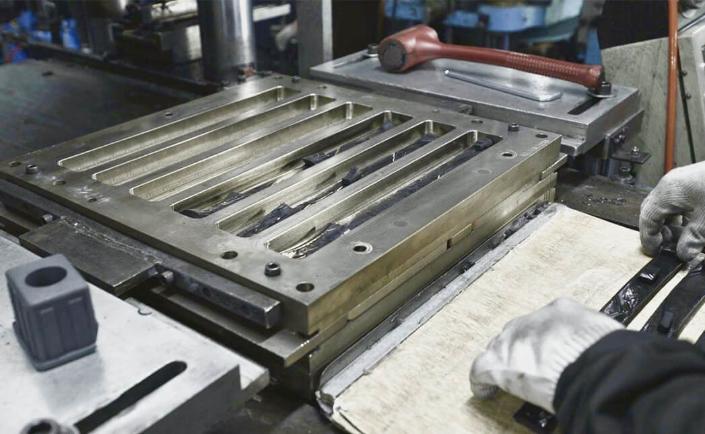
Vacuum compression molding is a rubber molding process that removes air from the mold before and during compression to reduce bubbles, improve density, and produce more consistent rubber parts. It is commonly used for industrial rubber components that require better surface quality, dimensional accuracy, and fewer internal defects.
Compared with standard compression molding, this process provides better control over trapped air during molding and vulcanization. As a result, vacuum compression molding is often chosen for precision rubber parts used in demanding industrial and OEM applications.
How Vacuum Compression Molding Works
Vacuum compression molding combines compression molding with a vacuum-assisted vulcanization process. The goal is to shape rubber material in a controlled environment while minimizing air entrapment that may affect product quality.
A typical process includes the following steps:
- Material Preparation: The process begins with the selection of an uncured rubber compound based on the final product requirements. Depending on the application, the compound may include base rubber, fillers, curing agents, and other additives needed for performance, durability, or environmental resistance.
- Preheating and Preforming: Before molding, the rubber material is preheated to make it softer and easier to place into the mold. This step helps improve material flow and prepares the compound for more stable forming.
- Mold Design and Preparation: The mold must be designed to match the required part shape, dimensions, and performance expectations. In precision rubber molding, mold quality directly affects surface finish, part consistency, and dimensional control.
- Vacuum Compression Molding: The preformed rubber is placed into the mold, and a vacuum system removes air from the mold cavity before pressure is applied. This vacuum environment helps reduce trapped air, voids, and other molding defects that can affect the finished part.
- Vulcanization: Once the mold is closed and pressure is applied, the rubber is heated to begin vulcanization. This curing stage gives the rubber its final mechanical properties, such as elasticity, strength, abrasion resistance, and thermal stability.
- Demolding: After the vulcanization cycle is complete, the molded rubber part is removed from the mold and prepared for any required finishing or inspection steps.
Why Vacuum Matters in Rubber Molding
In rubber molding, trapped air can lead to bubbles, voids, inconsistent density, and surface defects. These issues may affect not only appearance, but also sealing performance, durability, and dimensional stability.
The molding environment plays an important role in how rubber behaves as it is shaped and cured. During compression and vulcanization, the rubber compound must flow into the mold cavity and respond to heat and pressure in a controlled way. If air remains inside the mold, it can interrupt this process and create instability in how the material settles into the final shape.
Vacuum is important because it helps create a cleaner and more controlled molding condition before the rubber is fully formed. By reducing the presence of trapped air, manufacturers can better manage how the compound fills the mold and how the part develops during curing. This is one reason vacuum-assisted processes are used when product stability and process control are important considerations.
Key Benefits of Vacuum Compression Molding
Vacuum compression molding offers several advantages for manufacturers and buyers looking for high-quality molded rubber components.
Reduced Air Bubbles and Defects
Removing air from the mold cavity helps minimize internal voids, bubbles, and other imperfections that may occur in conventional molding processes.
Better Product Consistency
A more controlled molding environment helps improve density, uniformity, and repeatability across production batches.
Improved Surface Quality
Vacuum-assisted molding can help create cleaner surfaces and more stable part geometry, especially for parts with tighter quality requirements.
Suitable for Precision Rubber Parts
This process is often selected for rubber components that require more reliable dimensional control and better overall performance.
Vacuum Compression Molding vs. Standard Compression Molding
Both processes use heat and pressure to shape rubber in a mold, but the key difference is the use of vacuum.
In standard compression molding, trapped air may remain in the mold cavity during forming. In vacuum compression molding, air is removed before and during molding, which helps improve part quality and reduce common defects.
For general rubber products, standard compression molding may be sufficient. However, when product precision, appearance, sealing performance, or defect control are more important, vacuum compression molding is often the better choice.
For applications that require a different molding approach, vacuum injection molding may also be considered depending on part complexity, production efficiency, and material flow requirements. To learn more, read the article about rubber vacuum injection molding vulcanization.
Limitations and Considerations
Although vacuum compression molding offers important quality advantages, it is not always necessary for every rubber product.
This process may involve higher tooling standards, more technical control, and increased production cost compared with standard molding methods. Depending on the part design, application, and volume requirements, manufacturers should evaluate whether the added process control justifies the cost.
Choosing the right molding method should always depend on the actual performance requirements of the final product.
Zong Yih’s Vacuum Compression Molding Capabilities
At Zong Yih, vacuum compression molding is one of the rubber molding solutions we use for parts that require improved consistency, reduced air entrapment, and higher overall product quality. This process is especially suitable for custom rubber components used in industrial applications where defect control and stable performance are important.
With OEM and ODM manufacturing experience, our team works closely with customers to evaluate product structure, molding requirements, and end-use conditions. By combining process knowledge with custom production support, Zong Yih helps customers develop rubber parts that better match their technical and application needs.
If you are looking for support in vacuum compression molding, custom rubber molding, or industrial rubber component manufacturing, contact us to discuss your project.
Choosing the Right Rubber Molding Solution
Vacuum compression molding is a valuable process for producing rubber parts with lower defect rates, better consistency, and improved overall quality. For industrial buyers, OEM customers, and product developers, it can be an effective solution when performance and reliability matter more than basic production cost alone.
By understanding the process, benefits, and application requirements, manufacturers can make better decisions when selecting the most suitable rubber molding method. For projects that require consistent quality and technical support, vacuum compression molding can be a strong option for achieving reliable production results.